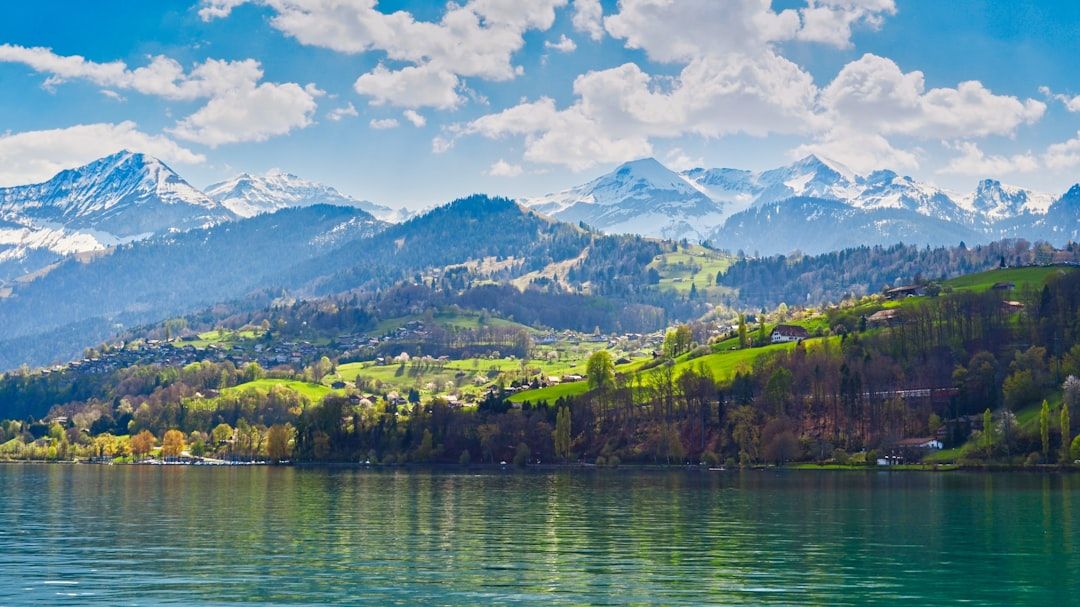
Switzerland's mountain transport is exceptional and priced accordingly. The pass you choose before arriving determines what the trip costs more than any other decision.
The options
Swiss Travel Pass — unlimited trains, buses and boats for a set number of days, free museum entry, and free or reduced mountain railways. High daily cost.
Half Fare Card — 50% off most trains, buses, boats and many mountain railways for a month. You pay half price only on journeys you make.
Regional passes — Berner Oberland, Jungfrau, Tell-Pass — which cover one area intensively and often beat the national options for a trip based in one valley.
Which wins
The general pattern:
Heavy daily travel across the country — Swiss Travel Pass.
Moderate travel, one or two bases — Half Fare Card, frequently by a wide margin.
One valley, lots of mountain lifts — the regional pass for that area.
Price your actual route. The Swiss operators publish full fares online and the arithmetic takes twenty minutes. It is the single most valuable twenty minutes of Swiss trip planning.
Note that the highest mountain railways — Jungfraujoch in particular — are discounted rather than free even with a full travel pass.
The high excursions compared
| Destination | Altitude | Note |
|---|---|---|
| Jungfraujoch | 3,454 m | Most expensive in Europe, ice caves |
| Schilthorn | 2,970 m | Revolving restaurant, Eiger view |
| Gornergrat | 3,089 m | Matterhorn, cheaper |
| Mount Pilatus | 2,128 m | Steepest cogwheel railway |
| Rigi | 1,798 m | Cheapest, lake views |
Jungfraujoch is the marketed one and it is not obviously the best. Schilthorn and Gornergrat give comparable high-alpine views for considerably less, and many visitors prefer them.
Whichever you choose, go on a clear day. In cloud you have paid a great deal for a white room. Webcams for all the summits are published — check them the morning of.
The panoramic trains
The Glacier Express and Bernina Express require compulsory seat reservations and sell out in peak season.
The same routes can be travelled on ordinary regional trains without reservation, at a fraction of the cost, with the same scenery through normal windows — and with the freedom to get off.
The panoramic carriages have curved roof windows and a meal service. Whether that is worth the premium is a real question rather than a rhetorical one.
What is free
The walking. Switzerland's hiking network is superb, waymarked to a national standard, and costs nothing.
Yellow signs give walking times rather than distances, and they are accurate.
The lakes — Geneva, Lucerne, Thun, Brienz — with public boats covered by passes.
The towns — Bern's arcaded old town, Lucerne's covered bridge, Zermatt's car-free centre.
Practical
Supermarkets — Coop and Migros — save a great deal in a very expensive country. Many have cheap self-service restaurants.
Tap water is excellent, including from village fountains unless marked otherwise.
Season: late June to September for high walking, December to March for skiing, and a shoulder gap in May and November when lifts close and mountain villages go quiet.